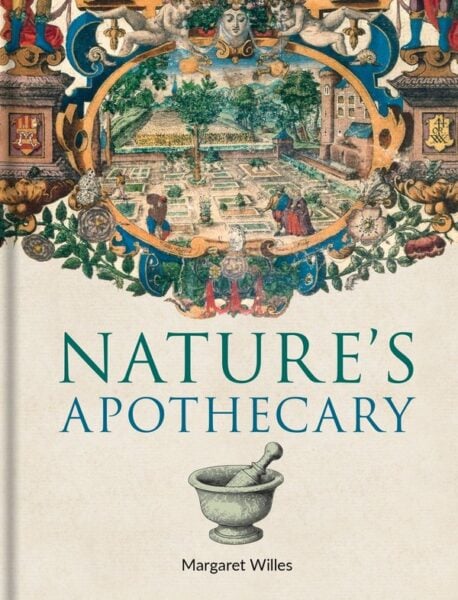
In the introduction to Nature’s Apothecary author Margaret Willes writes:
The classical Greek physician and philosopher Hippocrates once declared ‘Nature itself is the best physician.’ In this book I have taken a hundred examples of plants to show the vital role they have played in medicine, and indeed in daily life…”
The insightful introduction to Nature’s Apothecary takes us all the way back to the Greeks and then forward to the monasteries that housed herb gardens and apothecaries (which comes from the Greek word for storehouse). Knowledge of the medicinal properties of plants was passed down by families and cultures and disseminated via a growing number of books. I did not know that cobwebs were once used as bandages and during the war chlorophyll was extracted from nettles.
And then we get to fascinating profiles of a hundred plants, each accompanied by an illustration from John Gerard’s 1597 Herball.
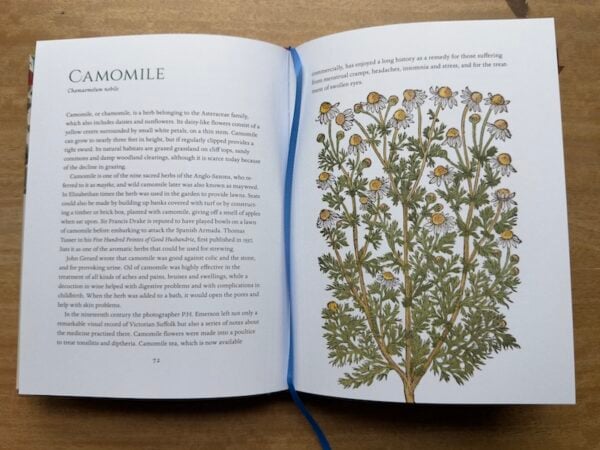
Many plants I’m sure you will recognize — cinnamon and borage, onion and nettle. But many plants were new to me, such as the herb elecampane, which aids in digestion, or coltsfoot, which looks a lot like dandelion and can be used to reduce inflammation.
Speaking of dandelions, not only are the leaves edible and make a nice salad but the roots were once ground up as a substitute for coffee. I like to imagine a future where people no longer spray chemicals on their dandelions but instead harvest them like tomatoes.
For those who want to round out their gardens with herbs they may not have considered or those who simply want to learn more about what our ancestors knew long before us — this book is an enjoyable and enlightening read.

John is an award-winning author of stories, novels and plays. He is author of THE STANDING DEAD, coming in 2027. He is also author of the novels The Tourist Trail and Where Oceans Hide Their Dead and co-author of the mystery Devils Island. He is editor of Writing for Animals (also now a writing program). More at JohnYunker.com.