
When was the last time you sat for a length of time in a quiet space outdoors, looking at, listening to, smelling, and communing with the vast biodiversity of the heterogeneous life forms all around you? How does contemporary Western society—and the systems and structures that shape it—prevent us from doing just that, detaching us from the world around us while also stripping natural spaces of the biodiversity and heterogeneity that comprise them? How can we begin to see and understand the natural world we are part of outside of these systems and structures? These are the questions Patricia Ononiwu Kaishian explores in her thought-provoking book Forest Euphoria: The Abounding Queerness of Nature.
Kaishian frames her book as a work of “queer ecology,” explaining how both her career as a mycologist and her experiences with the natural world are deeply informed by queer theory. Queer theory is an academic field of theory which explores the ways in which normativity, in its many forms, is deemed superior over difference or “deviance,” constraining and fracturing lives and communities and creating false hierarchies as a result. Though most commonly used as a framework for exploring compulsory heterosexuality’s impact on society, and, in particular, upon LGBTQ communities, queer theory can be applied to a variety of other fields as well, and here, Kaishian brilliantly extends its application to ecology.
We learn in Forest Euphoria about the queer (meaning, literally, non-heterosexual) mating patterns of slugs, crows, eels, bowerbirds, and mushrooms, and that some fungi have as many as 23,000 mating types. We learn about how and why certain aspects of our natural world, from snakes to snails to swamps, have been deemed different, dangerous, gross, or scary, not worthy of being considered beautiful or special. And we learn how these human-created narratives about certain places and species create false hierarchies and mask the communal, interdependent nature of all living things.
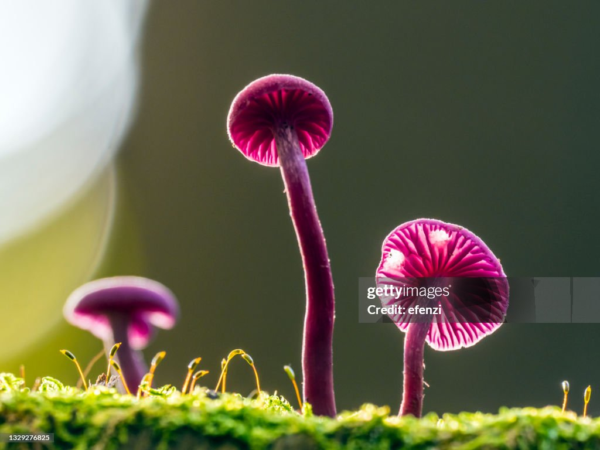
In keeping with her efforts to deconstruct man-made hierarchies, Kaishian’s book is refreshingly non-human-centric. She reminds readers repeatedly that places have intrinsic value outside of and independent from their capitalistic or productive value. She rejects the concept of what she calls “human exceptionalism,” repeatedly stressing that humans are not separate from the natural world but part of it. She likewise emphasizes that “other species live equally textured lives,” lives that are “no less vivid, no less storied, and no less evolved” than humans’.
But the plight of the human is not overlooked entirely. While Kaishian’s focus throughout is, for the most part, not on our own species, she nonetheless compellingly argues that by reconnecting with nature, we may not only be able to save other species, but also our own: in nature and its abounding queerness, she suggests, humans can find an antidote to the profound loneliness that is one of the great maladies of our species.
A mycologist by training, Kaishian’s book is rich with scientific information, indicating the author’s wealth of knowledge and extensive research in biology, ecology, and mycology. Yet, in the spirit of other nature writers like Sy Montgomery and Sabrina Imbler, Kaishian’s book is as deeply personal as it is scientific, often reading like a memoir. We learn about Kaishian’s childhood in New York’s Hudson Highlands, about her close relationship with her grandfather, about her favorite “sit spots” in various forests, and about the frogs she nurtured in her college dorm room rather than experimenting on them in class. In weaving the personal in with her discussions of the natural and ecological, the form of Kaishian’s book beautifully reiterates one of its central premises: that there is no separating humans from the natural world around them; that they are interwoven, interdependent, and inseparable in ways that are beautiful, wondrous, and meant to be cherished.

Melissa Dennihy, Ph.D., is a Professor of English at the City University of New York, where her work focuses in part on eco-literature and environmental humanities. She is the recent recipient of a grant to support her integration of sustainability curriculum into humanities courses for community college students. She lives in New York with her dog, Pearl, a rescue from Puerto Rico.