
In our writing program Writing for Animals, we talk a lot about language and how it reflects the ways we treat animals (for better and for worse) — and especially how our use of language can inspire change in the world. It is wonderful to see University of British Columbia professors Derek Gladwin and Kedrick James look at language as a way “to spark a shift in how we understand and interact with the world” in their book Becoming Ecological: Navigating Language and Meaning for Our Planet’s Future.
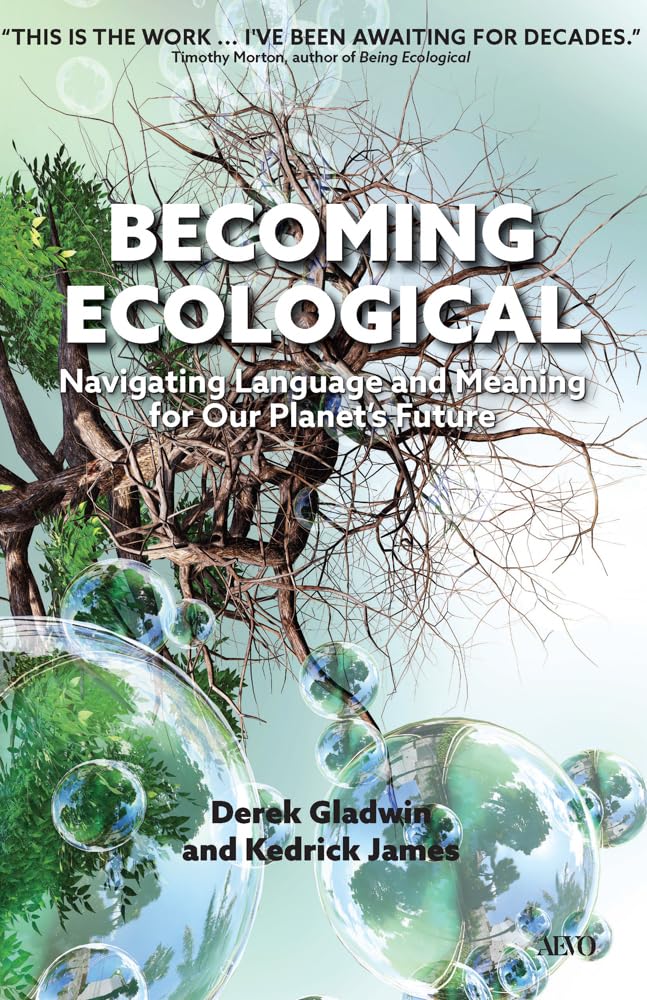
As the authors write, “language lies at the heart of how we approach and commingle with the environmental challenges of the modern world. The power and influence of language shapes our perceptions, defines our priorities, produces our politics, and ultimately guides the actions we take (or fail to take) toward the kind of ecological future we need to both survive and thrive.” In other words, they’re looking at “how the ways people talk can lead to ways of acting with greater ecological awareness and responsibility.”
As Gladwin and James note, people live within their own language ecosystems, and the authors make the effort to include a broad range of perspectives: multicultural, multisensory, multidisciplinary, human and nonhuman. The book is about “what it means to be ecological … the lifelong process of becoming ecological,” with language at its center.
All of us humans who read and listen to the conversations about our planet know that “language contributes to the creation of environmental norms, the establishment of societal values, and the construction of ecological identities.” In other words, how we use language can challenge, question, shape, and transform; as one example, Gladwin and James point out, “How we talk about climate change — whether we call it a ‘disaster’ or an ‘opportunity for change’ — greatly impacts how people respond. One path induces fear but also triggers apathy; the other feels more like an invitation to participate collectively.”
There is certainly no time like the present to use all the tools at hand to make a difference for our planet: “If we don’t change the language we use to talk and think about the future, we will continue to think old thoughts and come up with outdated responses to these new and unprecedented conditions.” Language and ecology are connected.
While philosophical on one level, Becoming Ecological is also accessible and hands-on: throughout the book are sidebars that encourage readers to reflect, to imagine, and to work and play with language. In one example, the authors suggest turning nouns like tree and river into verbs and to “practice ‘verbing’ environments in your daily life to develop greater awareness of these interconnections.” By design, the book’s chapters are “a series of progressive verbs as active agents for change,” from Becoming to Relating to Storying to Futuring.
Gladwin and James take these ideas and ground them in language, transforming them into possibility. For example, they note that becoming is “a continuous process of learning, unlearning, adapting, evolving, and embracing our ecological natures. And language plays a crucial role in shaping this process, influencing how we make sense of and navigate change.”
By asking us to deeply consider such words as reverberation (for example, how logging reverberates in the forest and the community; how sound waves reverberate among whale populations; how microwave reverberations affect bees), the authors encourage us to look not only more closely at our words but at how we communicate: “language reverberates through human interactions, influencing and connecting individuals and communities.”
Yet language is not only about speaking; it’s also about listening, and this is vital to our place in the world. “Humans have an innate ability to practice selective listening,” the authors write, and in the book’s second chapter, they reveal how our ability to listen is being challenged and how to rethink and reclaim our capacity for listening — to one another but mostly to the planet. And later, the ninth chapter on witnessing similarly emphasizes that being aware can be as vital as taking action.
Drawing on the wisdom of writers including Robin Wall Kimmerer, Kyle Powys Whyte, and Richard Wagamese, the authors note that language must also encompass the “more-than-human”: the animals and natural habitat that surround us. Yet the book’s fifth chapter, “Ingesting,” addresses issues with the mass production of cheap convenience food while not addressing the ecological impacts of factory farming, which destroys environments and harms humans in and near those environments. Most notably absent is any acknowledgment of the billions of more-than-human animals killed worldwide for food. The authors do note the language of disconnection — “Calling cow and pig flesh ‘beef’ or ‘pork’ removes the direct connection to the animal. This allows for eating ‘veal’ without thinking about how it was once a baby cow” — but while this is an important point, surely if we’re to be truly ecological, we need to not just embrace “slow food” but reconsider altogether our terrible habit of killing animals for food, especially when such food as veal comes not simply from baby cows but from the infliction of horrific abuse upon those baby cows.
Gladwin and James tackle other ecological issues such as waste, both digital and physical (one sidebar challenges readers to imagine having to keep everything they’ve acquired over a lifetime: “That first LEGO toy, mobile phone, or 1998 Honda Civic, all of them no longer working. What if there were no public garbage services or waste disposal centers?”) and rewilding (from language to territories). The chapter on storytelling will resonate for writers, especially those whose work focuses on animals and the planet, as it examines how we use stories and language to communicate, reflect, and inspire change. From technical terminology to metaphors, the authors discuss the myriad ways narratives, media, and language itself contribute toward “storying the future” — as well as acknowledge how corporations and politicians use language to influence public opinion. Either way, stories are important: “The language of stories can both heal and alter our lives.”
The last chapter, “Futuring,” is about the role of language in possibility, while emphasizing that the future is now; we have no time to waste when it comes to saving the planet. And language is crucial to our planet’s future. “Through language — in all the ways we communicate, make sense of reality, and create meaning — we shape how we see the world and how we choose to engage with it. It holds the power to influence how we co-create a society rooted in ecological responsibility and collective well-being.”

Midge Raymond is a co-founder of Ashland Creek Press. She is the author of the novels Floreana and My Last Continent, the award-winning short story collection Forgetting English, and, with John Yunker, the suspense novel Devils Island.