
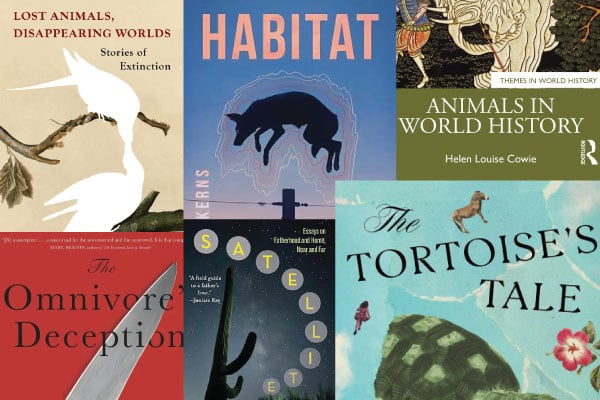
We published 28 book reviews this year and promoted many more. Out of all the books we’ve read, here are some of our favorites. We hope you enjoy them — and we thank you for supporting EcoLit Books.
We’ll see you in 2026!
JoeAnn Hart
JoeAnn Hart is the author of the novel Arroyo Circle, forthcoming from Green Writers Press in October 2024. Her most recent book is the prize-winning collection of short fiction, Highwire Act & Other Tales of Survival, from Black Lawrence Press. Other books include the novels Float, which swirls around conceptual art, bankruptcy, and plastics in the ocean, and Addled, a social satire. Her crime memoir is Stamford '76, A True Story of Murder, Corruption, Race, and Feminism in the 1970s.Satellite
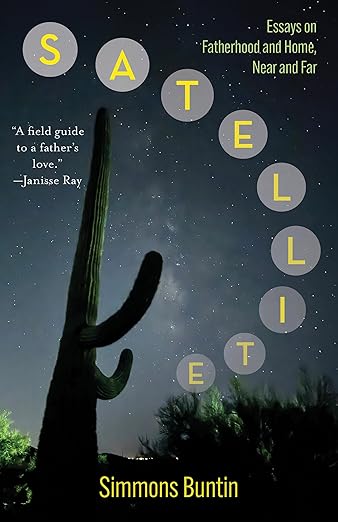
This fine collection of essays by Simmons Buntin, Satellite: Essays of Fatherhood and Home, Near and Far, leads with lizards. “They are tidy, amiable housemates that give us good reason to avoid pesticides.” The landscape is the American Southwest, and the over-arching question is how to appreciate and gently co-exist with nature and children, even while parenting in a neighborhood of javelinas and rattlesnakes. In “The Sum of All Species,” Buntin’s ten-year old daughter, Ann-Elise, catches a whiptail lizard. She and her sister have always collected small critters, kept for careful observation in terrariums and jars before being released back to the prickly wilds of the backyard. But Ann-Elise is determined to keep this lizard as a pet, and Buntin relents after he is assured that she has done the extensive research required to meet the lizard’s needs. He believes the inter-species relationship will help “establish her sense of connection to the natural world.” And there-in lies the beauty of the book, as over the years he invites his two girls to view the world as a fellowship of beings. Quoting Aldo Leopold, he writes, “We abuse land because we regard it a commodity belonging to us. When we see land as a community to which we belong, we may begin to use it with love and respect.”\
Habitat
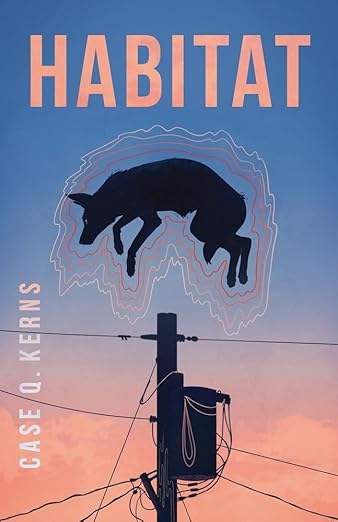
In Habitat, a delectably creepy novel-in-stories, set slightly in the future, Case Q. Kerns imagines how late-stage capitalism plays itself out in the worst possible ways. The corporate world is fully in charge as brutal civil suits replace the rule of law in a world sharply divided between the few haves and the many have-nots. Countries, such as they are, look the other way because they don’t want to get on the wrong side of the all-powerful corporations. Education requires a corporate sponsorship (read: indenture), and those who aren’t sponsored have only their bodies to sell, parts of which can be sold for decorative transplants. These status symbols for the wealthy create needless and horrific human suffering, in spite of the fact that in this future world, limbs can be easily cloned. The poor can also sell their bodies for sex, but since that industry is now under the corporate control, freelance tricks are considered “an act of conspiracy against the state,” and punishment is extreme.
Bloom Again
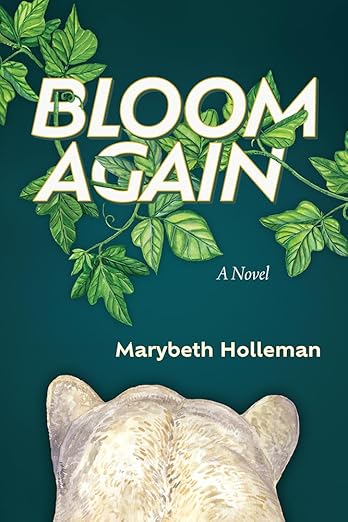
Edward O. Wilson, a pioneer of evolutionary biology, once wrote, “Humanities will have to blend with the sciences, because technology is going to demand the self-understanding of our species.” The search for self-understanding, personally and professionally, is the driving force of Bloom Again, a beautifully written debut novel by Marybeth Holleman, in which two women, an artist and a scientist, grapple with their lives in a warming world. With the urgency of a true crime narrative, Holleman plumbs their emotional depths as they struggle with mid-life crises, while managing to walk the reader through the global complexity of climate issues. It’s time for many things to change.
Midge Raymond
Midge Raymond is a co-founder of Ashland Creek Press. She is the author of the novels Floreana and My Last Continent, the award-winning short story collection Forgetting English, and, with John Yunker, the suspense novel Devils Island.The Tortoise’s Tale
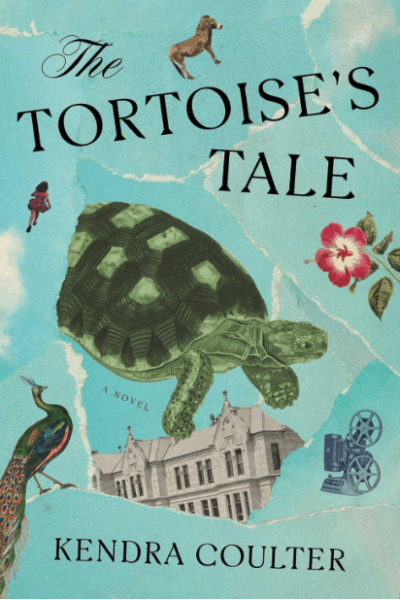
In her beautiful and engrossing novel, The Tortoise’s Tale, Kendra Coulter captures the awe of seeing the world through the eyes of one of the longest-living beings among us. Inspired by Jonathan, a 192-year-old Seychelles Giant Tortoise, Coulter’s novel brings us into the world of a Galápagos tortoise who spends more than a century of her life as an exotic pet on a California estate, outliving human and animal companions as she observes life in all its forms: through music, politics, culture, family, and relationships. The Tortoise’s Tale gives us a glimpse into a rare and important species, as well as a snapshot of more than a century of human life, most notably how things change and how they do not, and the result is a novel that is thought-provoking, insightful, and ultimately hopeful.
More
John Yunker
John is co-author, with Midge Raymond, of the mystery Devils Island. He is also author of the novels The Tourist Trail and Where Oceans Hide Their Dead. Co-founder of Ashland Creek Press and editor of Writing for Animals (also now a writing program). More at JohnYunker.com.Lost Animals, Disappearing Worlds: Stories of Extinction
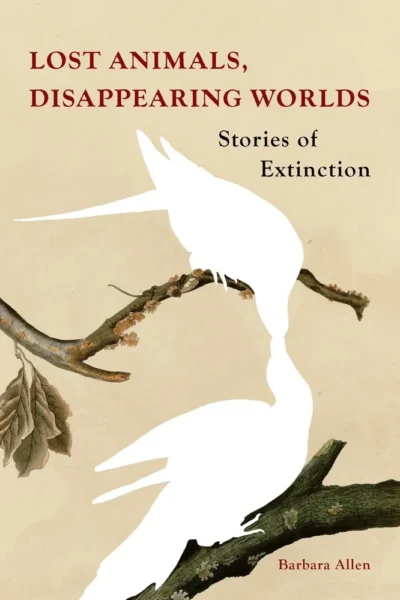
What would the last living passenger pigeon (seen in silhouette above) have to say if he or she were alive today? Or the Tasmanian tiger? Or the Carolina parakeet?
In Lost Animals, Disappearing Worlds: Stories of Extinction, author Barbara Allen gives voice to 31 extinct species. Allen writes: “We humans are forgetful creatures. Memorials are needed — in many cases are essential — for the deep act of remembrance.”
This book is a fitting memorial to them.
The Omnivore’s Deception
If the title of this book reminds you of the bestseller The Omnivore’s Dilemma by Michael Pollan, that is intentional.
For as author John Sanbonmatsu writes, Michael Pollan did a great disservice to animals when he said there was such as thing as good meat:
Pollan claimed to have found a narrow passage between the rock of the factory farm and the hard place of vegetarianism. The solution to our broken industrialized food system was to be sought in smaller-scale animal farming … [Pollan] positioned himself as the bearer of glad tidings for the millions of meat-loving consumers who, though concerned about the environment and vaguely uneasy over reports of animal cruelty, had no wish to overturn their dietary habits … We could have our meat and our consciences, too.
Animals in World History

If history is written by the victors, then this book is a much-needed step forward in our awareness and understanding of the non-human animals who have suffered at the hands of humans for millennia.
Judging by the title, I expected to find a book weighing in at a thousand or more pages. But at just over 200 pages author Helen Louise Cowie succeeds admirably in providing multi-faceted profiles and perspectives of animals small and large around the world and through the ages.
Nicole Emanuel
NICOLE EMANUEL is a PhD candidate in the Department of English at the University of Minnesota, Twin Cities. Her work brings together animal studies, weird studies, queer ecology, and other interdisciplinary fields. She earned an MA at the University of Alaska, Fairbanks in 2021 and completed a double major in Biology and English at Macalester College in 2016.North Sun: Or, The Voyage of the Whaleship Esther
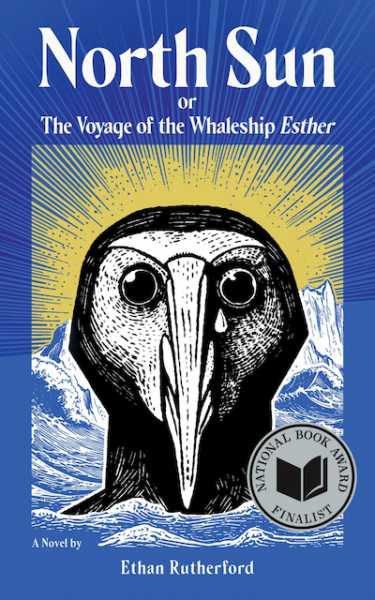
I’ve thought about this book very often since reading it early in 2025. This novel about a whaling crew setting out for the arctic in the late 1870s is both fragmented and lyrical, harrowing and hopeful, and feels piercingly resonant to today. The fact that such an idiosyncratically beautiful book published by a small indie press was nominated for a National Book Award was one of the most encouraging things that happened in the literary world for me this year.
The Sound Atlas
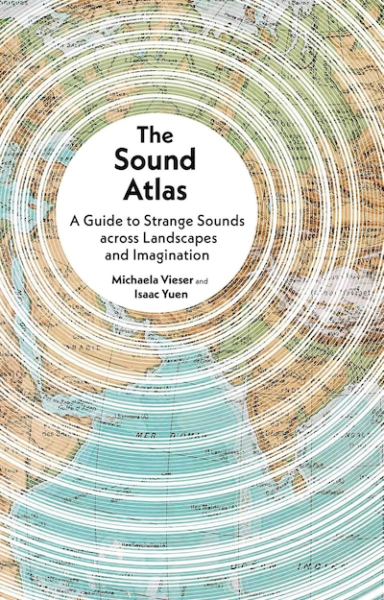
A good addition to the bookshelf of anyone interested in bioacoustics, ecomusicology, or who just wants to tune in to their sonic environment a bit more.
Is A River Alive?
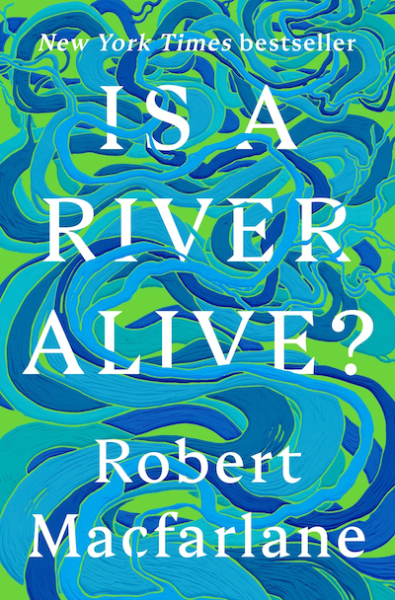
It has a lot going for it, taking the best aspects of a romantic adventure travelogue and merging them into a stirring and deeply researched exploration of the modern Rights of Nature Movement. Macfarlane’s inventive attempts to reanimate our language – to stretch for innovative ways of building a respect for the liveliness of other organisms and landscapes into the very vocabulary, grammar, and syntax with which we communicate – was one of my favorite aspects of a book which manages to be a truly exciting read, as both a page-turner and an intellectually stimulating achievement.

John is an award-winning author of stories, novels and plays. He is author of THE STANDING DEAD, coming in 2027. He is also author of the novels The Tourist Trail and Where Oceans Hide Their Dead and co-author of the mystery Devils Island. He is editor of Writing for Animals (also now a writing program). More at JohnYunker.com.