
As we approach the end of the year I’m pleased to share another impressive selection of newly published (or soon-to-be-published) environmental books. Enjoy!
Cowbells on the Kill Floor: Veganism, Legacy and the End of the Old World
By Hamish Blakely
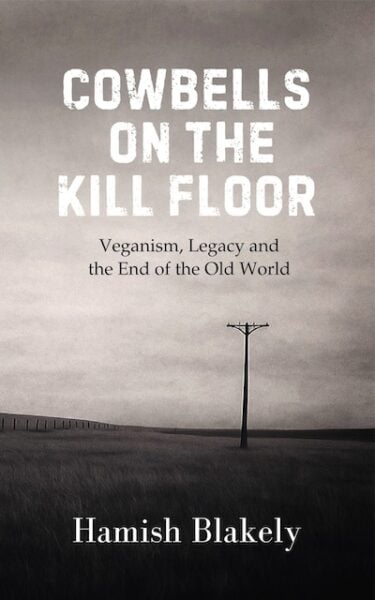
What happens when the traditions we inherit collide with the world we are destroying?
At its core, this book is about liberation. It challenges speciesism as the forgotten injustice of our age, and shows how rejecting domination opens the way to a world built on respect, justice, and possibility.
Cowbells on the Kill Floor is a passionate call to see animal agriculture for what it is: the first and greatest obstacle to ending exploitation on this planet. At once forthright and hopeful, this book speaks to vegans, activists, and anyone who has ever questioned whether our relationship with the non-human realm can change before it is too late.
Drawing on history, memory, and hard truths, Hamish Blakely strips away the myths that have allowed animal farming to persist — exposing its violence, its politics, and its legacy of denial. Yet this is not just a book about ending meat. It is about what rises in its place: true accountability, imagination, and a world where justice extends to every living being.
Shadow of a Bear: A Poem in 23 Passages
By Rebecca Weil
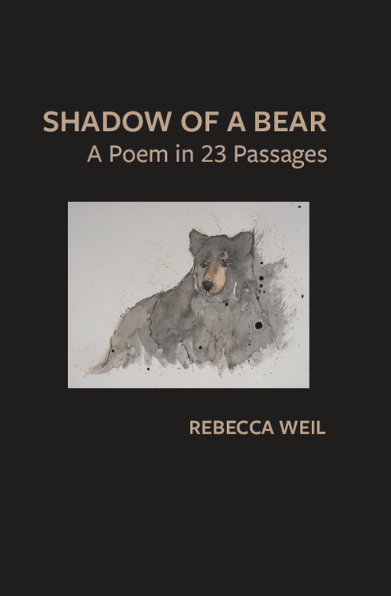
Shadow of a Bear: A Poem in 23 Passages is an immersive meditation on wildness, kinship, and the porous boundary between human and animal life, Rebecca Weil layers observation of seasonal changes and the rhythms of rural life with the presence of black bears as both literal and symbolic beings.
All proceeds from the book will go to the Kilham Bear Center for the rescue, care and release of injured or orphaned black bear cubs.
The Philosopher and the Assassin
By D.A. Baden
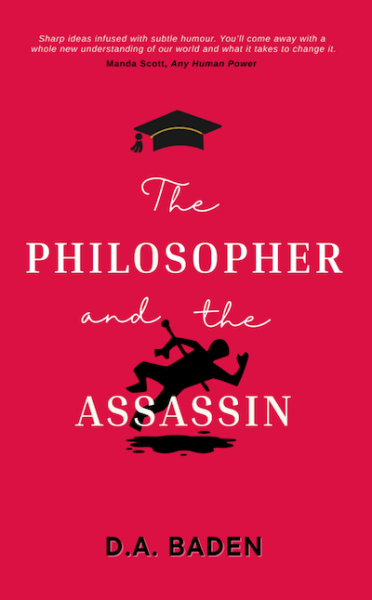
The Philosopher and the Assassin* is contemporary literary fiction that weaves together moral philosophy, climate policies and murder mystery.
This original take on the traditional campus novel addresses broad themes of what justice means in an age of climate change. The story grapples with one of the most pressing questions of our age: what do we do when our current systems are leading us to planetary destruction?
Ladder to Heaven
By Katie Welch
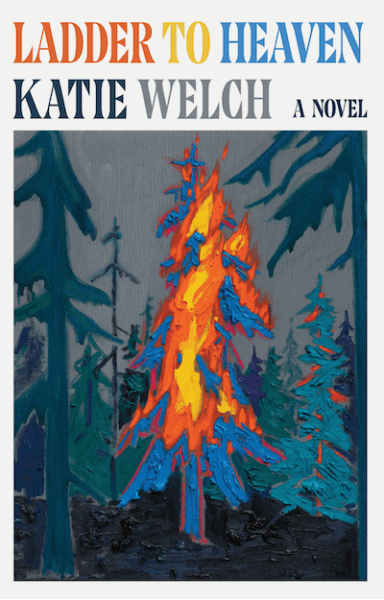
In 2045 an earthquake ravages the Pacific Coast of North America and the world shifts. Suddenly people and animals can understand each other, while the chaos of climate change combines with the destruction of the earthquake in terrifying ways. Inland, where she should be safe, Del Samara finds her life spiralling out of control. Struggling with addiction and with her ranch in ashes around her, Del decides her family would be better off without her. Leaving her daughters behind, she retreats to her father’s fishing cabin with her dog, Manx. When she emerges three years later, she finds the world since the earthquake has become a very different place and she begins a dangerous journey to Vancouver Island to find her family and, perhaps, find peace.
Feeding the Future: Restoring the Planet and Healing Ourselves
By Nicole Negowetti
Unsustainable food production and consumption is a major driver of the degradation of the environment and urgently needs to be addressed. But despite the tireless work of researchers, advocates, community organizers, and many others, the global industrial food apparatus continues to consolidate and resist transformation. In Feeding the Future, Nicole Negowetti argues that a fundamental shift in how we approach this crisis—based on a regenerative philosophy that honors complexity, interdependence, and care—is essential for building a sustainable future.
The reality is that how we grow food, what we eat, and how we discard it pose an existential threat to us and most other species on Earth. Feeding the Future is a much-needed call to action and an indispensable resource for building a better future for all.
Anthropause: The Beauty of Degrowth
By Stan Cox
In Anthropause, Stan Cox writes that by embracing degrowth, we are not turning our backs on progress. Instead, we are redefining it. We can produce enough goods to satisfy everyone’s needs, Cox argues, while liberating ourselves from ecocidal economies and the injustices they impose. This book lays out a clear vision of what we will gain and how as we embrace this revolutionary transition.
Love in a Time of Climate Change: Honoring Creation, Establishing Justice
By Sharon Delgado

In Love in a Time of Climate Change: Honoring Creation, Establishing Justice, Sharon Delgado guides readers on a journey of faith inspired by love of God and neighbor that integrates personal spirituality with action for climate justice. The book employs Scripture, tradition, reason, and experience to explore creation and justice in the context of climate change and climate justice. Through this process, readers discover a unique way to understand and assess the realities of climate change, discern its physical and spiritual implications, reflect on planetary warming theologically, and discern a faithful response.

John is co-author, with Midge Raymond, of the mystery Devils Island. He is also author of the novels The Tourist Trail and Where Oceans Hide Their Dead. Co-founder of Ashland Creek Press and editor of Writing for Animals (also now a writing program). More at JohnYunker.com.